

Introduction: More Trail, Less Drag
On the trail, every gram matters. An ultralight hiking bag isn’t just a style choice—it’s a performance multiplier. By cutting unnecessary weight in your load and your pack, you conserve energy, reduce fatigue, and hike more efficiently. Whether you're a weekend wanderer, a commuter seeking outdoor escapes, or a goal-driven thru-hiker, understanding the advantages of ultralight hiking bags helps you choose gear that supports your journey.
In this post, we’ll explore the physiological logic behind lighter loads, the design elements that unlock efficiency, trade-offs to watch, and how to apply these lessons to your next bag—or your next hike.

The Physiology of Efficiency (H2)
Energy Cost Scales with Load
Studies of load carriage reveal a roughly linear or superlinear increase in energy expenditure as pack weight rises. The heavier the load, the greater strain on muscles, joints, and posture. As one ultralight hiking guide puts it, lighter packs reduce bodily stress and allow you to “cover longer distances, with fewer injuries.” Hammock Gear
Walking with heavier loads also alters gait, increases joint torque, and raises dynamic stresses on your body. In a biomechanics study, researchers developed a backpack with adjustable stiffness to reduce the metabolic cost of load carriage—showing measurable reductions in muscle activation. PMC+1
Other innovations aim to decouple load motion from the body, absorbing peaks of force and reducing the felt effort. In one design, a backpack that harvests energy also reduced load impact by ~20% in experiments. SciTechDaily+1
The takeaway: when your pack is lighter, your body recovers faster, your stride stays more natural, and you sustain better performance.
Seven Reasons to Lighten Your Load
A practical essay on reducing pack weight lists benefits that go beyond just raw energy savings:
-
Fewer injuries, less wear on joints
-
Longer hiking days with lower discomfort
-
Flexibility to carry small “luxuries” without overloading
-
Better agility and balance
-
Lower psychological load (you worry less about carry)
-
Easier decision-making on what to bring
-
Greater enjoyment of the trail, not just survival mode Slower Hiking
These benefits stack: less physical burden means more mental clarity, which means more enjoyment, which means you're more likely to hike again.
Design Features That Amplify Efficiency (H2)
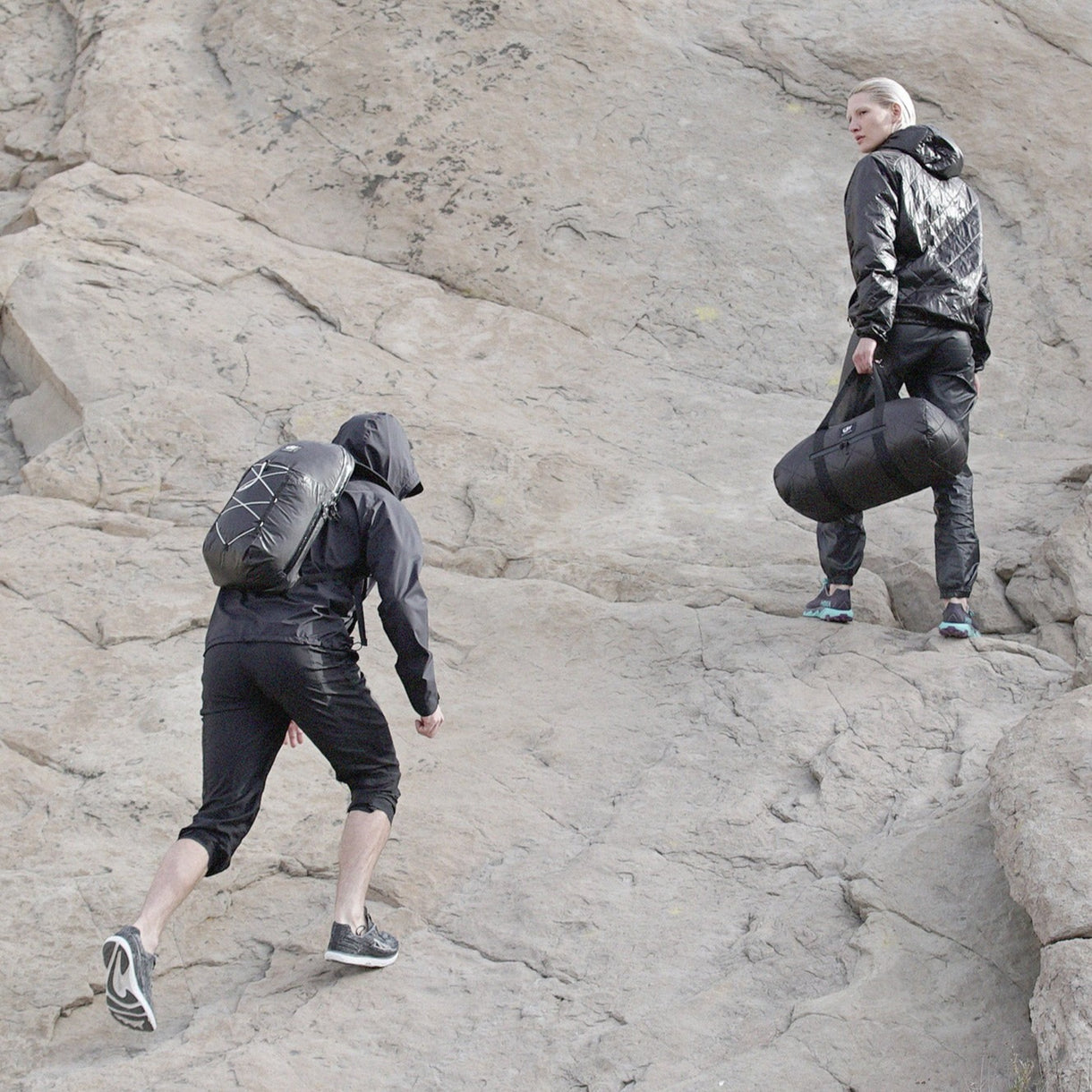
To make an ultralight bag truly efficient, it's not enough to just cut fabric weight. The smart design is what makes light gear viable for serious use.
H3: High-Strength, Low-Weight Fabrics
-
Use of ultra-high strength materials (ripstop nylons, composite laminates)
-
Reinforced zones in corners or wear areas so thin fabric is protected
-
Waterproof coatings or membranes that don’t add bulk
H3: Minimal Yet Effective Structure
-
Removable or partial frames and stays—provide support when needed, fold away when not
-
Compression systems that stabilize load and prevent shifting
-
Smart geometry so pack hugs your line of motion rather than pulling you off balance
H3: Organizational Simplicity
-
Simplified compartments: fewer pockets, but the right pockets
-
Internal sleeves or dividers for gear so weight is distributed
-
External lash loops or light webbing to carry extra gear without bulky gear loops
H3: Carry System & Comfort
-
Straps shaped ergonomically, with just enough padding
-
Sternum or stabilizer webbing that is optional yet effective under load
-
Ventilated or structured back panels to help cooling under motion
A bag that supports efficiency helps you maintain hydration, movement, and endurance rather than fighting you.
Trade-Offs & Real-World Considerations (H2)

Every design choice is a trade-off. Recognizing these helps you pick what matches your priorities.
-
Durability vs. weight. Extremely thin fabrics reduce weight but may wear faster in abusive conditions.
-
Comfort vs. minimal padding. A truly ultralight pack might feel bare on hard shoulders for long days.
-
Feature minimalism. Cutting pockets or zippers saves weight—but you might lose convenience.
-
Cost. Advanced fabrics and engineering often come at premium prices.
By being aware, you can choose the balance that matches your hiking style, terrain, and frequency.
How to Use These Lessons with GBY Ultra & Beyond (H2)
-
Try applying efficient design principles to your everyday carry. The same lightweight mindset can improve urban commutes and travel daypacks.
-
Use modular pouches (like GBY’s Utility Pouch) inside your pack so you only load what you need per trip.
-
Prioritize packs that allow flexibility—load stabilization, reinforced zones, modular attachments.
-
Test your kit in increments. Try removing 10% of weight and see whether you feel the difference over 10 km.
Even if GBY Ultra doesn’t have a full hiking rucksack line yet, their product philosophy—strong materials, minimal weight, smart layout—mirrors the same efficiencies you seek in trail gear.
Key Takeaways
-
Ultralight hiking bags save energy, reduce fatigue, and let you hike further with less stress.
-
Lightening load matters—but the design that supports lightness matters more.
-
Choose smart materials, clever structure, simplified organization, and comfort features wisely.
-
Understand trade-offs so your gear fits your style, terrain, and durability expectations.
-
Apply ultralight thinking across all your carry systems—trail, travel, and daily life.
Ready to experience what lighter carry feels like—even off the trail? Explore GBY Ultra’s ultralight options and find gear that supports your movement, not fights it.


